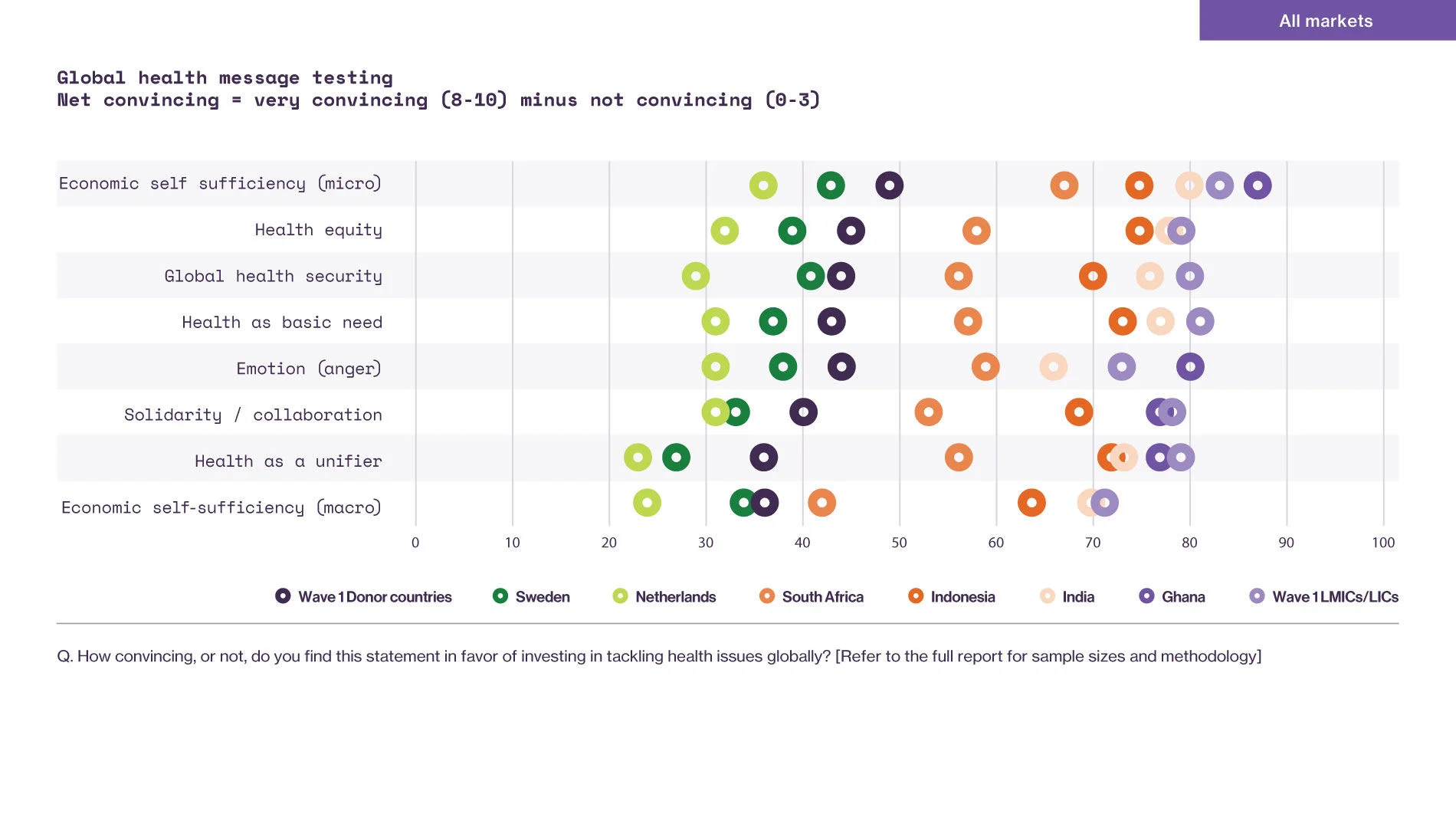
Wave 2 testing confirms the strongest arguments from wave 1 continue to test well.
As in wave 1, “micro-economic self-sufficiency” was the strongest message, while other top performing frames included “health equity”, “health as a basic need” and “global health security”.
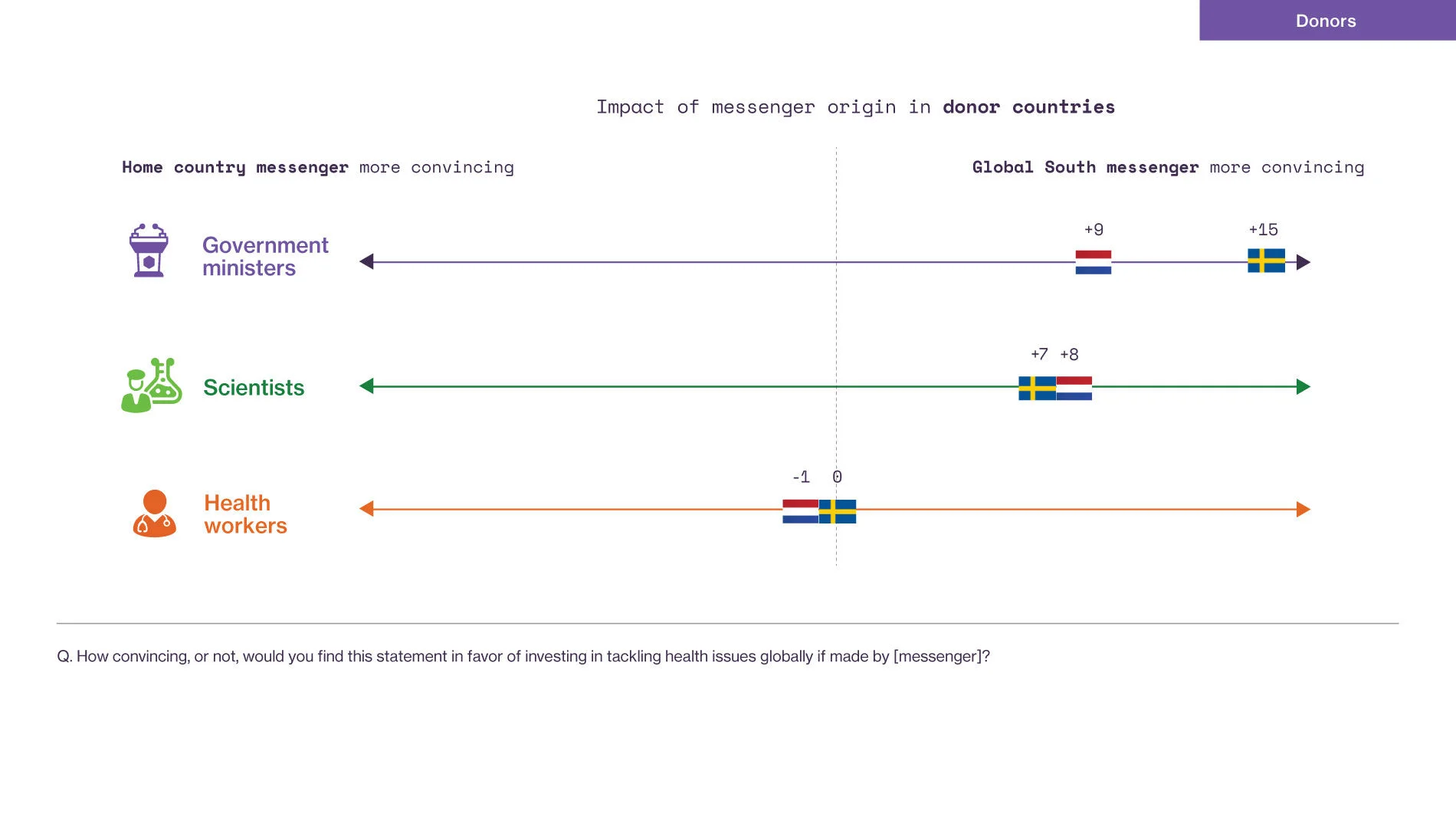
Wave 2 findings provide additional evidence for the value of Global South voices in donor markets.
Messages attributed to messengers from the Global South test as more convincing than those attributed to messengers from the donor countries.
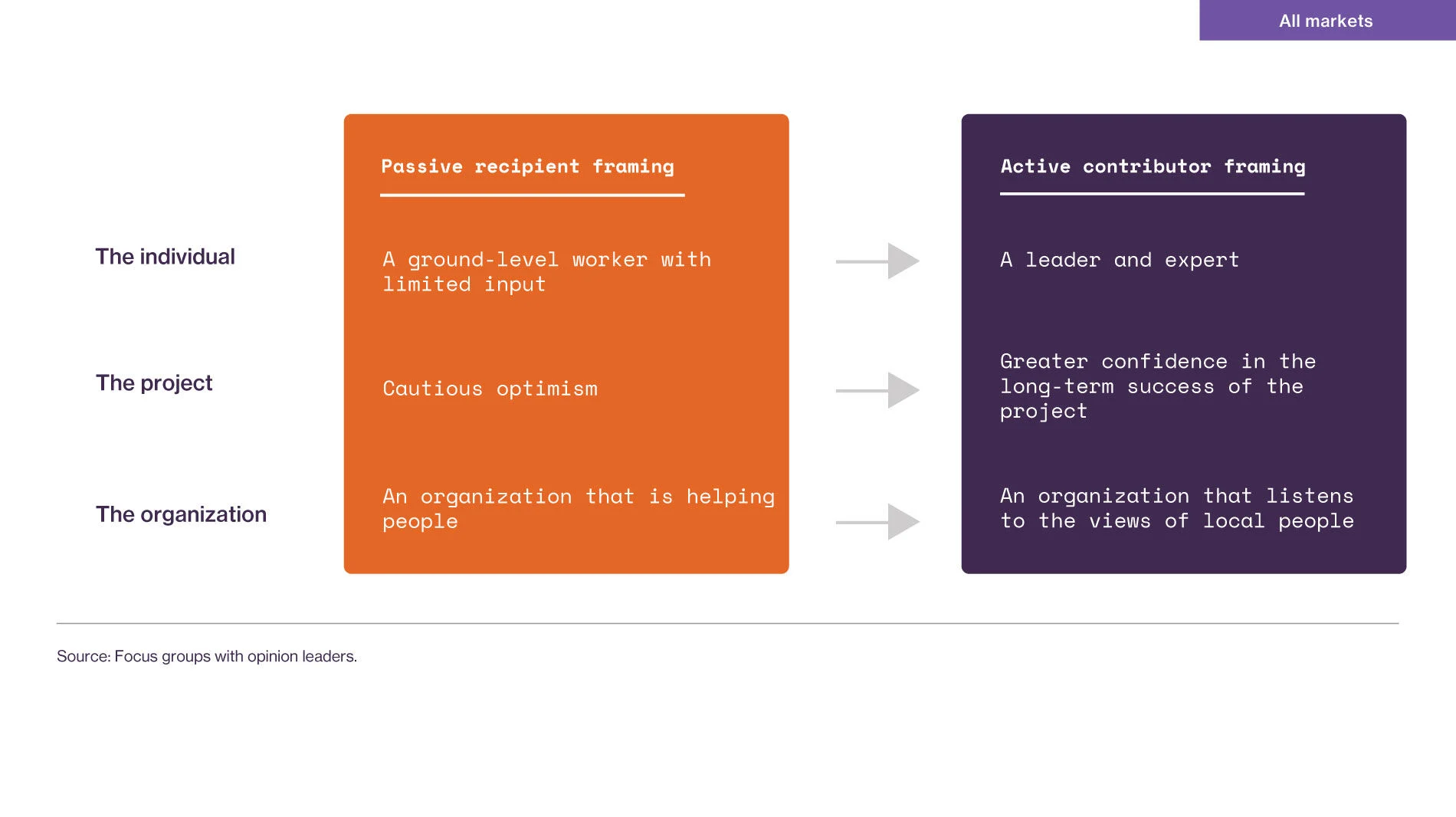
Focus group testing shows that by framing aid recipients as active contributors (rather than passive recipients), we can positively change how individuals, projects and organizations are seen.
The “active contributor” framing shifted perceptions of the individual depicted, from worker to leader or expert; shifted how a project was viewed, increasing confidence in long-term success; and shifted perceptions of the organization, to one that listens and is more deeply invested.