The overseas aid context

Emerging powers can bring fresh energy to development

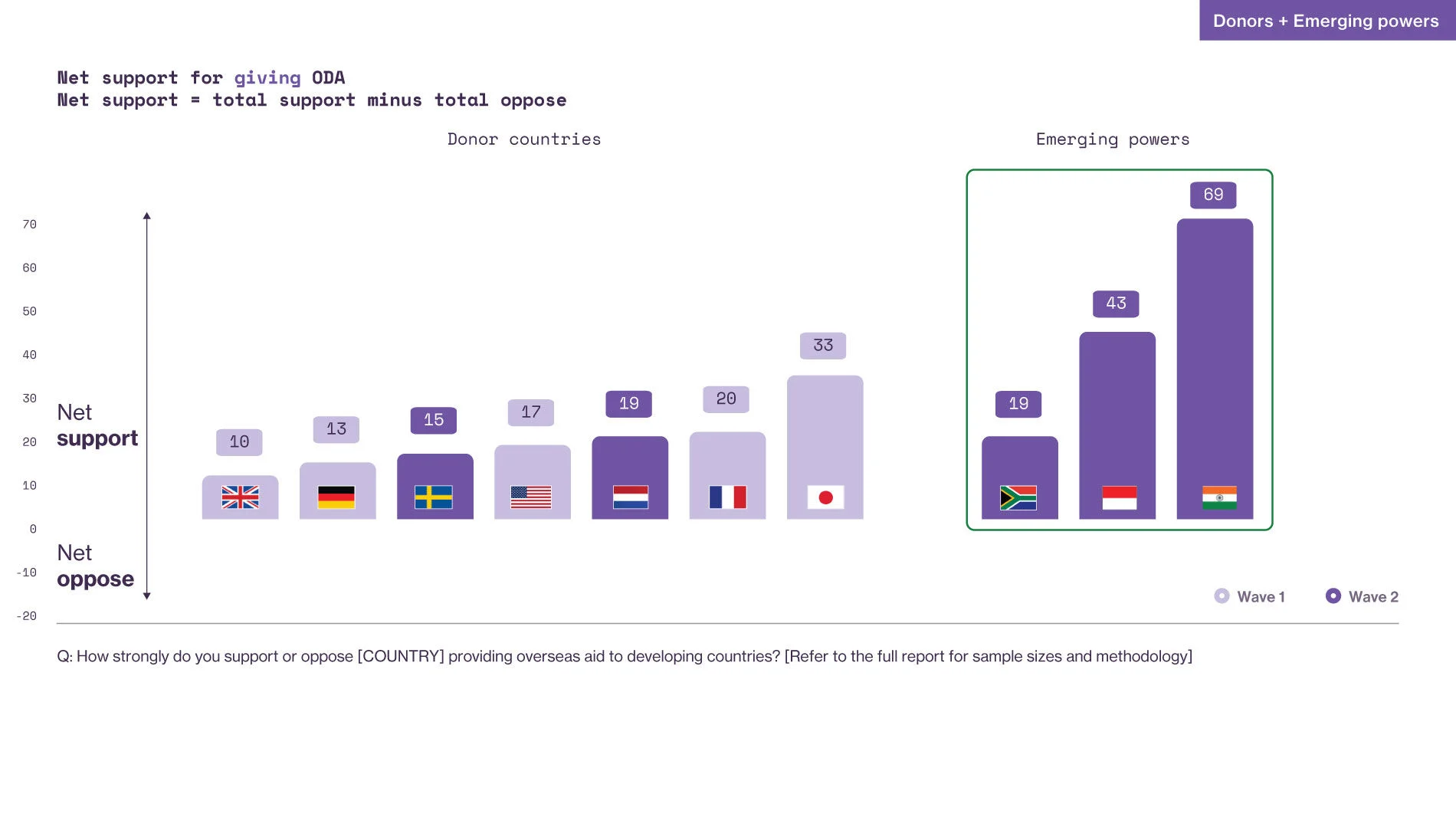
Bar chart showing net support for giving ODA with net support values for donor countries increasing from UK 10 to Japan 33 and emerging powers from South Africa 19 to India 69, comparing two waves of data.

While support for providing overseas aid is coming under pressure in many donor countries, emerging powers bring greater positivity.

Levels of support for providing aid in wave 2 donor countries are broadly in line with wave 1 countries. But support is significantly higher in India and Indonesia.
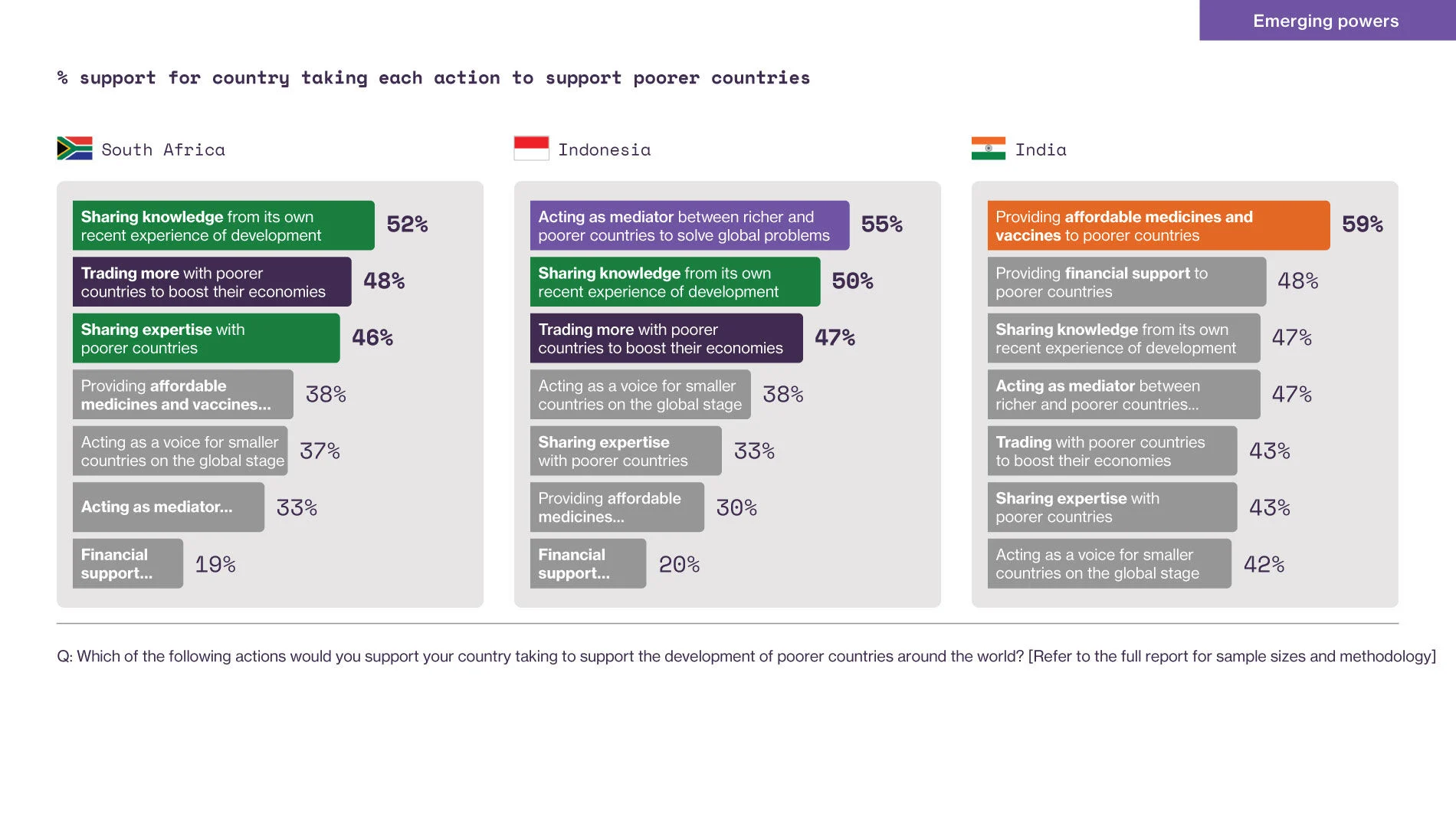
Bar chart showing percentage support in South Africa, Indonesia, and India for country actions supporting poorer countries, including sharing knowledge, trading more, and providing affordable medicines and vaccines.

There is support for emerging powers to play different roles on development, beyond traditional donor roles.

The role people in emerging powers think their country should play varies by market and appears to link to perceived national strengths.
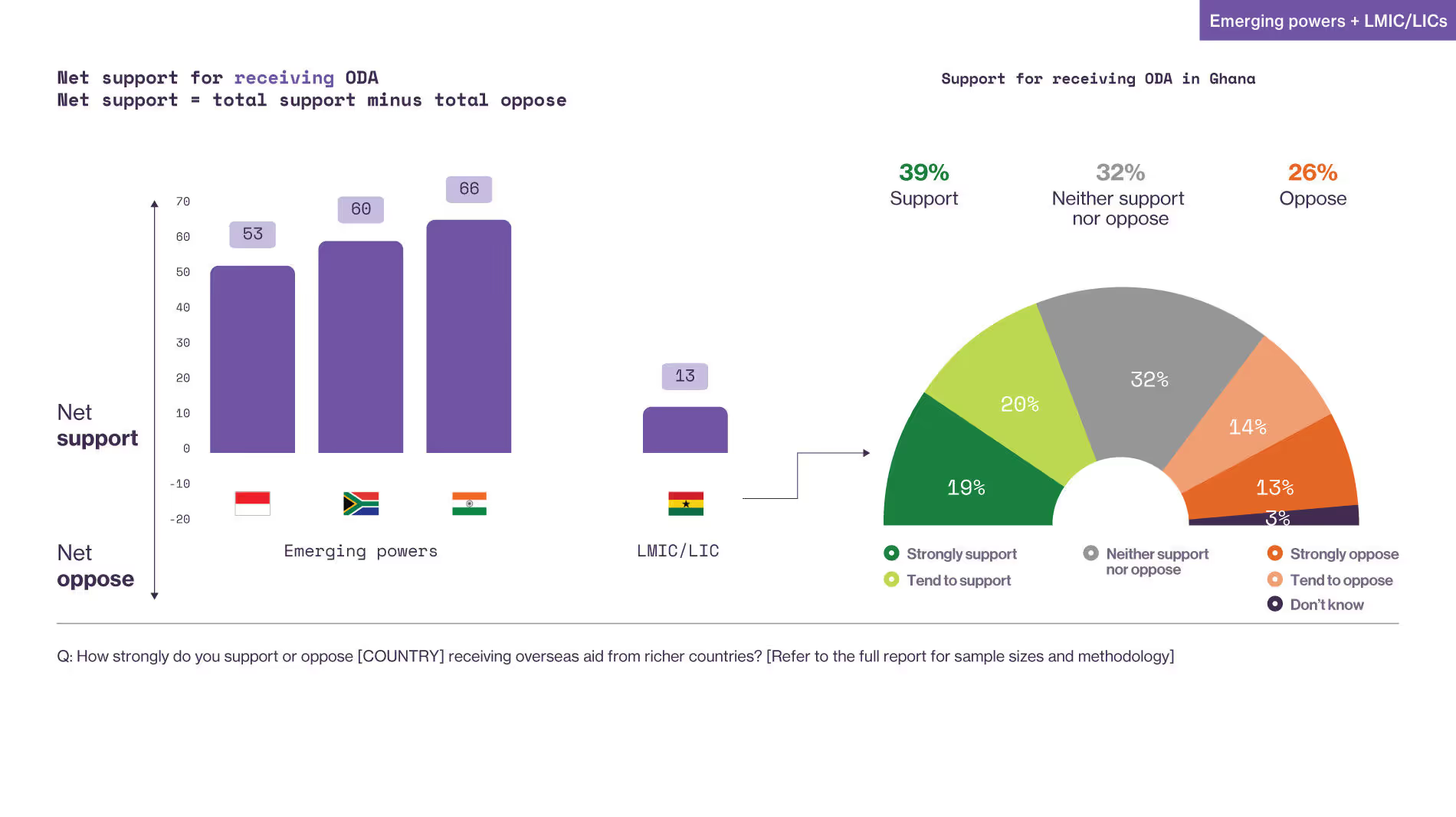
Bar chart shows net support for receiving overseas development aid (ODA) from richer countries among emerging powers Indonesia (53), South Africa (60), India (66), and low and middle-income countries/low-income countries (LMIC/LIC) Ghana (13). A pie chart details Ghana’s support for receiving ODA: 39% support (19% strongly support, 20% tend to support), 32% neither support nor oppose, and 26% oppose (13% strongly oppose, 14% tend to oppose, 3% don't know).

Testing recipient country perspectives (case study in Ghana): From a recipient perspective, our wave 2 research shows there is net support for receiving aid across both emerging powers and Ghana.

However, net support for receiving aid is relatively lower in Ghana.
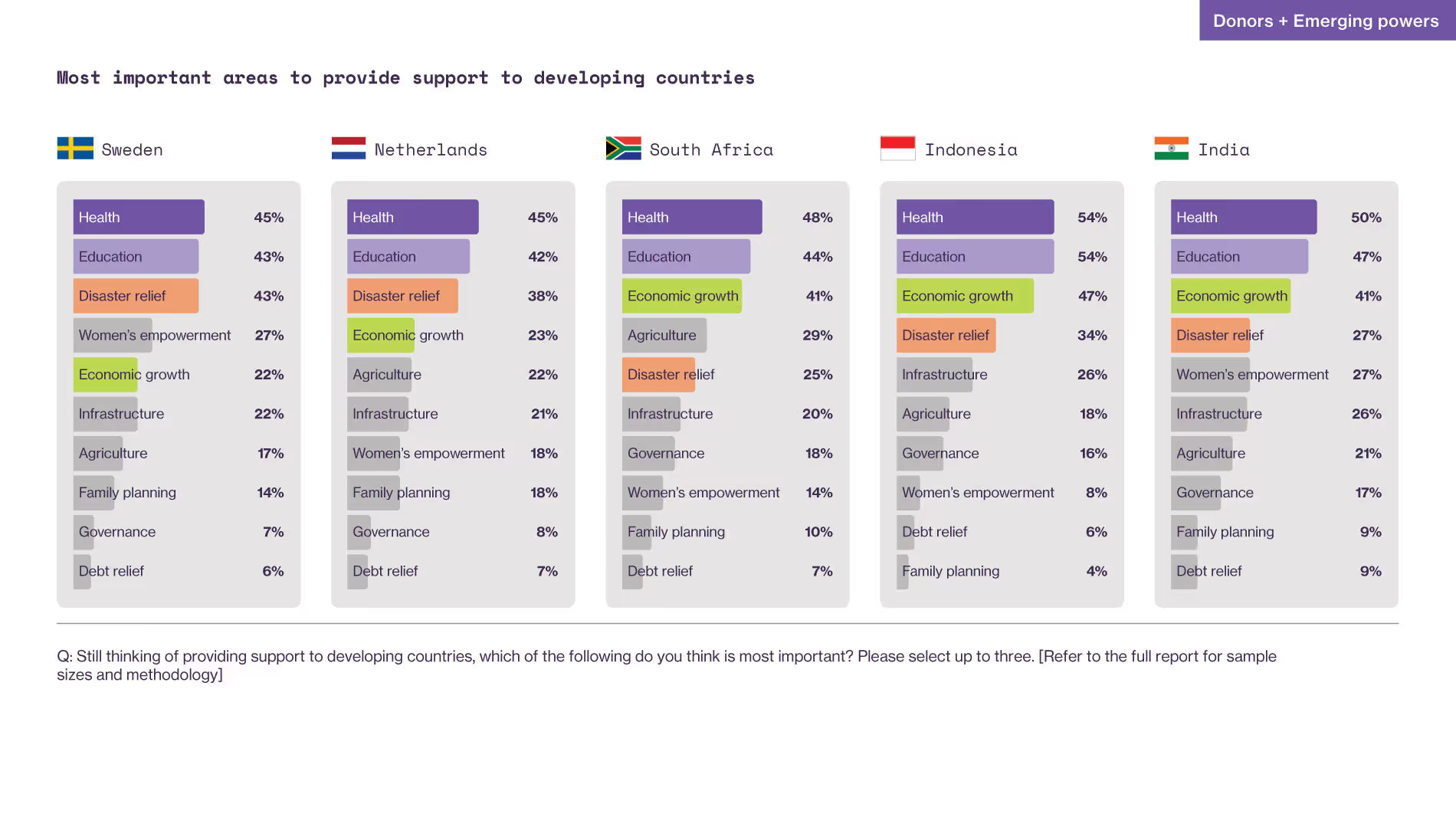
Bar charts showing most important areas to support developing countries by Sweden, Netherlands, South Africa, Indonesia, and India, highlighting health, education, disaster relief, and economic growth percentages.

In terms of areas of aid spending, health stands out as a top priority from both the donor and recipient perspective.

In donor countries, health is consistently rated as a top priority for support.

While in recipient countries, health is also a priority – albeit second to economic growth which is consistently rated as the most important area for support.
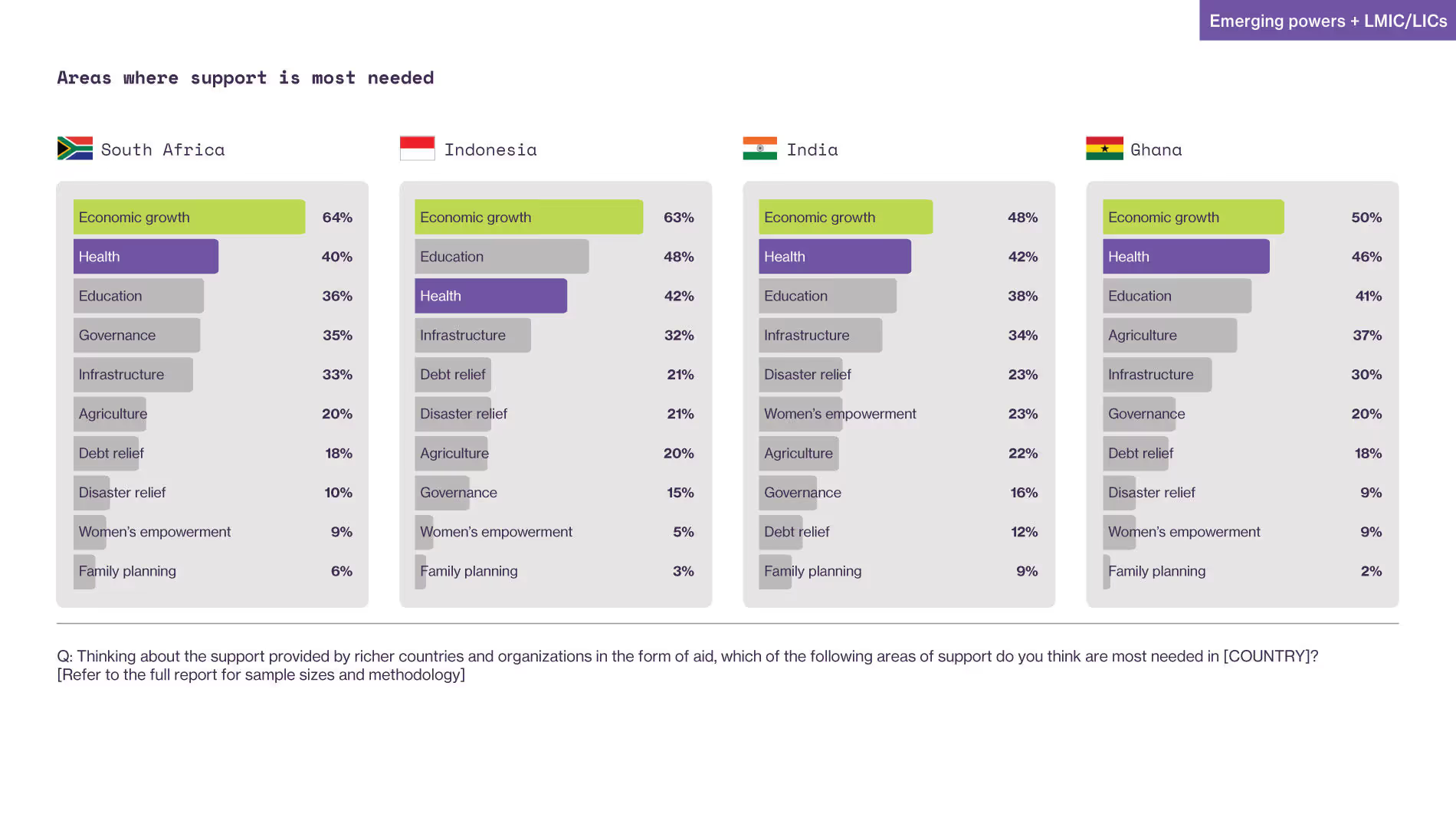
Bar chart showing areas where support is most needed in South Africa, Indonesia, India, and Ghana, highlighting economic growth and health as top priorities.